
Archived article
Please note that tax, investment, pension and ISA rules can change and the information and any views contained in this article may now be inaccurate.
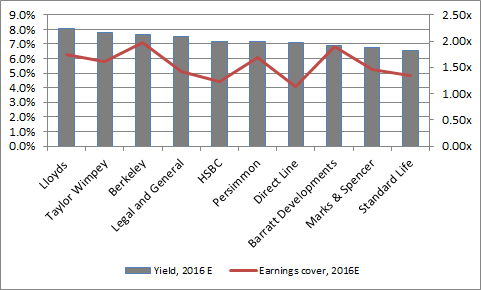
Dramatic share price movements following the UK’s vote to leave the EU have resulted in Banks and Housebuilders dominating the dividend yield charts for the FTSE 100, with Lloyds now on a prospective dividend yield of over 8% for 2016 according to consensus analyst forecasts. However, there are now question marks over whether the dividend policies of these firms will remain unchanged.
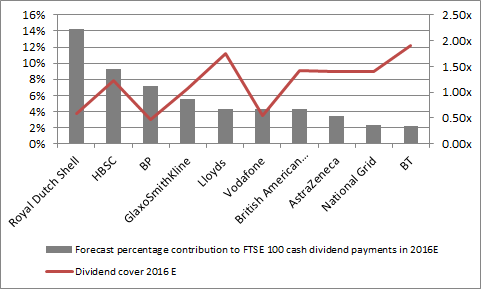
The oil stocks that were amongst the highest yielding stocks before the EU referendum are now nowhere to be seen after their dollar-inspired share price rallies.
Top 10 forecast dividend yields post Brexit vote (data correct as at 5 July 2016):
Top 10 forecast dividend yields pre Brexit vote (data correct as at 22 June 2016):
“The FTSE 100 is now forecast to yield around 3.5% this year, down from the 4% forecast pre referendum as a result of the index’s rally since the Brexit vote. At the top of the table there are some truly mouth-watering yields on offer but the question is whether these yields are sustainable based on the new outlook for these businesses," says Russ Mould, AJ Bell Investment Director.
“Lloyds and HSBC are both in the top five for highest dividend yields for this year, but this assumes HSBC pays an unchanged dividend this year even though earnings cover is thinner than ideal and that Lloyds hikes its shareholder distribution from 2.25p to 4.38p a share as previously planned. The fall in the latter’s share price suggests the market is becoming more nervous that this may not happen, especially in the event of any downturn in the UK housing market, given Lloyds’ mortgage exposure.
“Four of the top ten highest yielders are now expected to be housebuilders – Taylor Wimpey, Berkeley, Persimmon and Barratt Developments.
“Taylor Wimpey is due to offer a 9.2p special dividend pending shareholder approval at this month’s AGM, while Berkeley and Persimmon both have clearly defined cash-return programmes laid out for the next five years.
“They have strong balance sheets and could make the payments in the event of a recession if they stop buying land – although it would be interesting to see if they took the chance to acquire new plots during a downturn, as this could lay the foundations for profits growth during the next upcycle.
“Again, the market is expressing fears that a UK recession could derail their dividend-payment plans. At least earnings cover for the dividend is currently forecast to be at least 1.7 times at the housebuilders, although their profits are very sensitive to changes in house prices and any small drop could lead to sharp declines in earnings. Income-hunters need to do their research on the UK economy, the housing market and the builders’ balance sheets and strategies before they decide to take the plunge or not.
“The two oil majors, BP and Shell, that occupied two of the top three spots before the referendum, are both now on a prospective yield of 6.2%. Not too shabby by any stretch of the imagination but a decline from 7.2% and 7.0% respectively.”
“One other trend to watch is the weaker pound. The FTSE 100 draws around 70% of its sales from overseas, so a weak pound could boost the index’s total earnings when they are translated back into sterling and enhance dividend cover.
These articles are for information purposes only and are not a personal recommendation or advice.
Ways to help you invest your money
Put your money to work with our range of investment accounts. Choose from ISAs, pensions, and more.
Let us give you a hand choosing investments. From managed funds to favourite picks, we’re here to help.
Our investment experts share their knowledge on how to keep your money working hard.
Related content
- Tue, 17/12/2024 - 10:20
- Thu, 07/11/2024 - 11:00
- Wed, 06/11/2024 - 12:06
- Mon, 21/10/2024 - 16:26
- Wed, 09/10/2024 - 10:17