
Archived article
Please note that tax, investment, pension and ISA rules can change and the information and any views contained in this article may now be inaccurate.
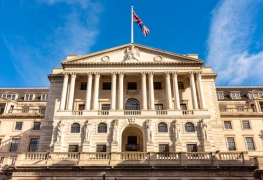
Inflation has fallen below the Bank of England’s target of 2% for the first time in three years, marking the end of the high inflation that created so much financial pain and turmoil over the past few years.
Inflation hit 1.7% in September, which has already sparked concerns that the Bank of England has pushed interest rates too high, and worries about whether we might be in for a spell of below-target inflation as a result.
This latest inflation figure means that markets are now expecting a flurry of interest rate cuts at the end of this year and into next. Current expectations are that interest rates will be around 4.5% by the end of this year and under 4% by the middle of 2025.
Although inflation looks well under control, the rising energy price cap in October will push inflation up once again. But on the other hand, sterling’s rise on the currency markets will reduce the price of imported goods, such as commodities and textiles, which can work to push down prices - although this effect is expected to fade as we head towards the end of the year.
Lower inflation clearly has an influence on asset returns too. Each percentage point of annual returns delivered by savings and investments now provides more bang for your buck when it comes to growing your spending power. Or, to look at it another way, falling inflation means savers and investors need a lower return to match the current inflation rate and ensure their money is keeping up with rising prices. While we shouldn’t read too much into one monthly reading of inflation, the central economic forecast looks to be one of falling interest rates over the next year.
Cash
On the face of it lower inflation is good for cash savers, but expectations of interest rate cuts will feed their way into lower cash savings rates too. Nonetheless cash savers still have their head well above water when it comes to beating inflation, with the best rates still offering around 5%.
We’re due an updated forecast from the Bank of England, but their last monetary report suggested inflation would be around 2.5% over the next year or so. If interest rates fall in line with expectations, this will lead to a squeeze on the real returns enjoyed by savers in variable rate accounts. Given the outlook for interest rates to fall, the best deals for fixed term accounts still look pretty perky, and those who don’t need immediate access to their cash might consider if it’s a good time to lock in current rates.
Mortgage rates
As interest rates fall we can also expect mortgage rates to dip, which is of course good news for anyone stepping onto the housing ladder for the first time. Lower interest rates are also good for those remortgaging, but many borrowers will still be paying far more than their current mortgage if they secured it when rates were rock bottom.
Someone whose mortgage is coming up for renewal and who has a five-year fix will have got that deal in the fourth quarter of 2019, when a typical rate for a 75% loan to value stood at around 1.7%, according to Bank of England data. These borrowers might be in for a nasty rate shock, though unless they’ve been living under a rock they probably know what’s in store. This serves to illustrate how some of the pain from higher interest rates is still in the post for the economy at large.
By contrast anyone coming off a two-year fix might well have brokered their deal in the fourth quarter of 2022, when the Trussonomics programme laid out in the mini-Budget wreaked havoc in the mortgage market. Average rates for a two-year fix on a 75% loan to value hit 6% at that time, and some borrowers will have been stuck paying significantly more. Remortgaging in a market where the best two-year fixes are coming in under 4% will seem like sweet relief to these borrowers, who felt the sharpest pain from the Trussonomics debacle.
Bonds
Bond yields fell after the latest inflation figures were published, with the yield on 10-year UK Government bonds (gilts) falling from 4.2% to 4.1%. Lower inflation is good for conventional bonds, as it increases the value of their fixed income streams and it means we’re likely to see lower interest rates, which in turn pushes down yields and inflates prices.
In theory gilt yields should reflect interest rate expectations over the term of the bond, and so it’s not the case that an interest rate cut will produce a fall in bond yields, or indeed have any effect whatsoever if it is fully priced in. However, if inflation continues to come in below expectations, that would prompt markets to expect more rapid or bigger interest rate cuts, which would be positive for bond prices. Gilt yields have been rising in recent weeks, probably reflecting some jitteriness about the forthcoming Budget.
Two-year gilts are current yielding 4%, which doesn’t look too great for savers when you consider the best two-year fixed term cash savings accounts are yielding somewhere in the region of 4.5%, according to Moneyfacts. However, the gilt yield starts to look more attractive for low coupon government bonds, which offer a return that is almost tax-free, because gilts aren’t subject to capital gains tax. For instance, a theoretical gilt yielding 4% delivered entirely through capital gains would be equivalent to an interest-bearing bond or savings account paying 6.6% in the hands of a higher rate taxpayer who had used their Personal Savings Allowance, or 7.3% in the hands of an additional rate taxpayer. Little wonder then that low coupon gilts have been used as cash alternatives by wealthier individuals looking to manage their tax bill.
UK equities
Lower inflation is also good for UK stock markets as it means dividends and capital growth look more attractive in real terms. A more buoyant consumer who is less constrained by inflation also spells good news for companies that sell discretionary items to UK households. Should they materialise, lower mortgage rates specifically would be good news for the housebuilding sector. On the other hand, lower interest rates are a double-edged sword for banking stocks. Lower rates usually lead to a lower net interest margin for banks, but healthier consumer balance sheets also require banks to set less aside for bad loans.
The prospect of lower interest rates also reduces discount rates on future profits, boosting their present values. Lower bond yields would also mean companies could take on debt at a lower cost, leaving more revenue to flow through to the bottom line. However, as mentioned above, falling interest rates don’t necessarily spell falling bond yields, which reflect movements in interest rate expectations. Clearly these expectations can be affected by interest rate movements, but it’s not a one for one relationship. The debt taken on by companies also includes a premium for the risk of default, which will tick up if economic conditions look more troubled, or if the outlook for a particular company or sector deteriorates.
Overall a period of falling interest rates and lower inflation provides some positive mood music for equities, though limp economic growth and a lack of investor confidence may continue to drag on the performance of the UK stock market. More money in consumer pockets combined with lower variable cash rates might persuade more individuals to invest in the market, though when they do so it’s largely been via global funds rather than UK ones for some considerable time.

Written by:
Laith Khalaf
Head of Investment Analysis
Laith Khalaf is AJ Bell's Head of Investment Analysis. He joined the company in 2020 and continues to explore the world of personal investing, providing research and analysis to both AJ Bell customers and the media. He has a degree in Philosophy from the University of Cambridge.
Ways to help you invest your money
Put your money to work with our range of investment accounts. Choose from ISAs, pensions, and more.
Let us give you a hand choosing investments. From managed funds to favourite picks, we’re here to help.
Our investment experts share their knowledge on how to keep your money working hard.
Related content
- Thu, 01/05/2025 - 10:57
- Tue, 29/04/2025 - 09:23
- Wed, 23/04/2025 - 15:04
- Tue, 22/04/2025 - 13:58
- Thu, 17/04/2025 - 09:28